

What Is Repossession?
Repossession occurs when a lender takes back a vehicle after the borrower defaults on their auto loan. Your car serves as collateral for the loan, giving the lender a legal right to reclaim it if you stop making payments.
 There are two types of repossession. Voluntary repossession happens when you return the vehicle yourself, while involuntary repossession occurs when the lender hires a repo agent to take the car without your cooperation.
According to data from Cox Automotive, approximately 1.73 million vehicles were repossessed in 2024, representing a 43% increase from 2022. High interest rates and rising vehicle prices continue to put pressure on Kentucky families struggling to make their monthly payments.
Kentucky Law on Vehicle Repossession
Kentucky follows the Uniform Commercial Code (UCC), which allows lenders to repossess vehicles without a court order—as long as they don’t breach the peace.
 Under Kentucky law, your lender isn’t required to give you advance notice before repossessing your vehicle. The terms of your loan agreement specify what constitutes a default, and some lenders may begin repossession after just one missed payment.
Repo agents cannot enter any locked space without a court order, including garages, fenced yards with locked gates, and other secured areas on your property.
The Kentucky Legislature has established a four-year statute of limitations under KRS 190.124 for creditors to file a lawsuit against you for any remaining balance after repossession. This timeline begins from either the loan’s original maturity date, the date the vehicle was sold after repossession, or the accelerated maturity date if the lender accelerated the loan due to default—whichever applies to your situation.
| Kentucky Repossession Quick Facts | Details |
|---|---|
| Court order required? | No (unless entering locked areas) |
| Advance notice required? | Not by state law; check your contract |
| Can enter private property? | Yes, if no breach of peace |
| Can enter locked areas? | No, not without court order |
| Statute of limitations | 4 years |
| Licensing required for repo agents? | No state requirement |
Can a Repo Man Enter Your Private Property?
Yes, a repo man can legally enter your private property in Kentucky. However, they must follow strict rules, and violating these rules could give you legal recourse.
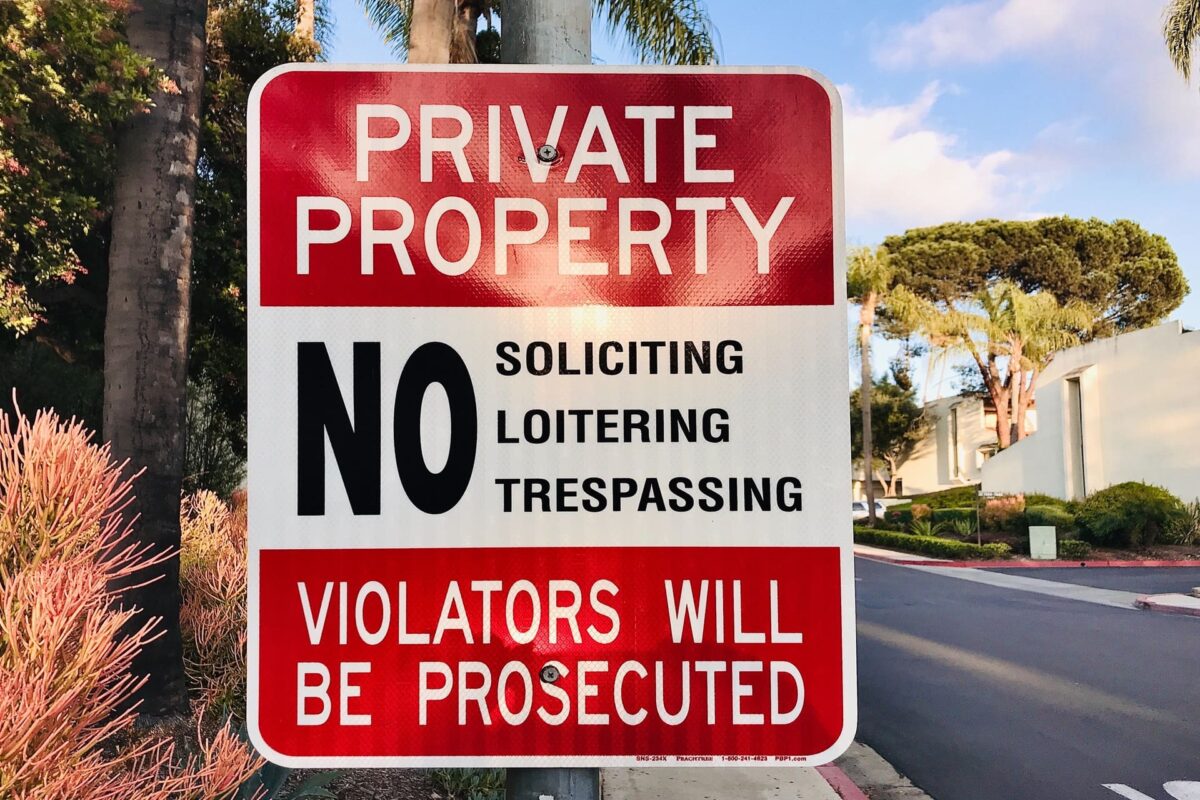
 “Private property” includes your driveway, front yard, and any open areas that don’t require breaking barriers to access. A repo agent can legally walk up your driveway and take a car parked there.
The key legal concept is “breach of the peace.” Kentucky law prohibits repo agents from committing any action that could cause a disturbance or confrontation during repossession. Knowing these rules can help you identify car repossession loopholes that may protect your vehicle.
What repo agents are permitted to do on your private property:
- Take a vehicle parked in an open driveway: If your car is visible and accessible without barriers, it can be repossessed.
- Enter through an unlocked gate: An unlocked or open gate doesn’t provide legal protection.
- Repossess at any time: There are no restrictions on when repossession can occur, though most happen in early morning hours.
Situations Where a Repo Agent Cannot Enter Your Property
Kentucky law provides several protections against aggressive repossession tactics.
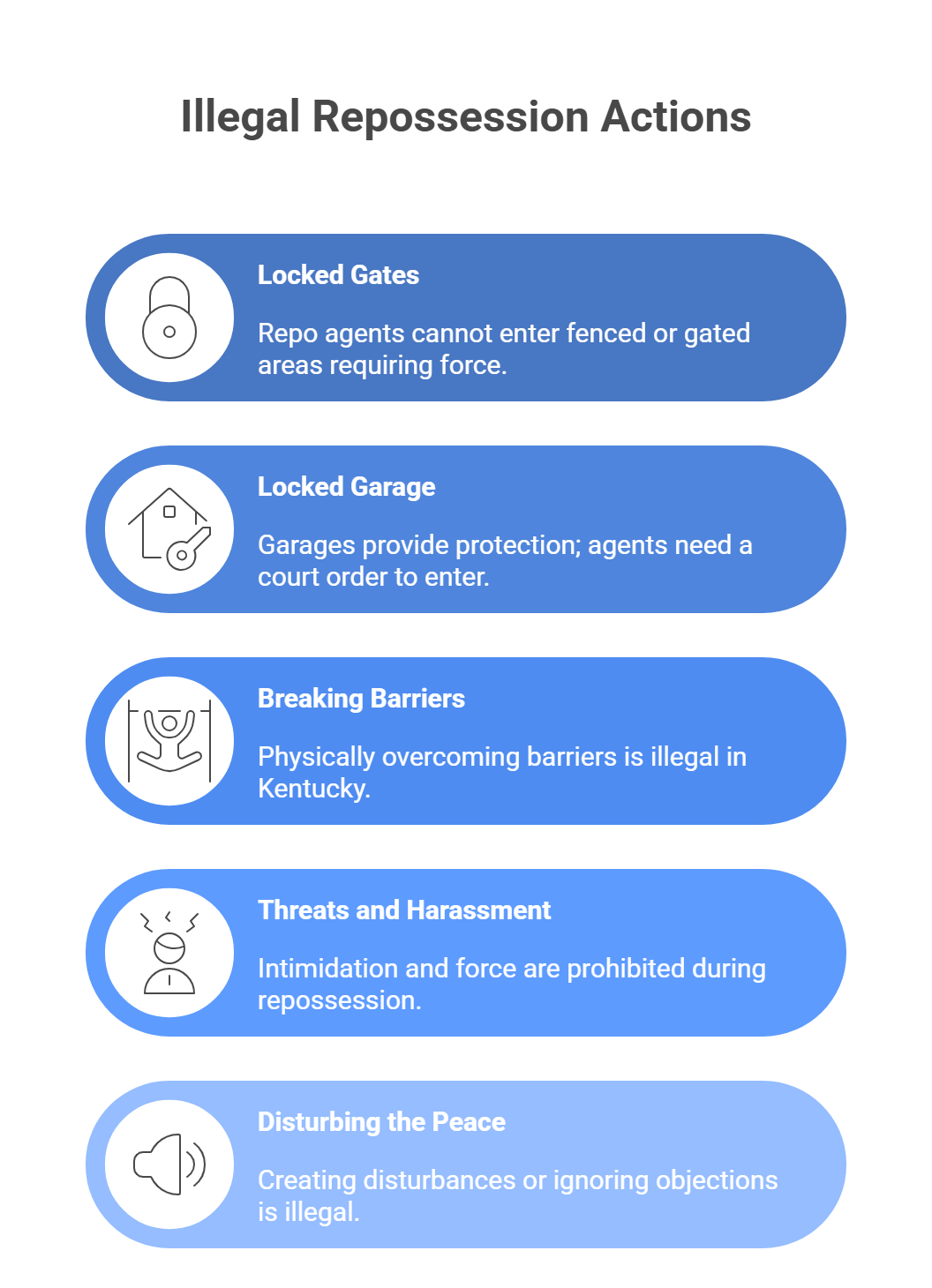
- Locked Gates and Fenced Areas: A repo agent cannot enter a fenced yard or gated area that requires opening a lock or breaking a barrier.
- Entering a Locked Garage: Your garage provides significant protection. A repo agent cannot open a garage door, whether manually or by remote, without a court order.
- Breaking Locks or Climbing Fences: Any action requiring the repo agent to physically overcome a barrier violates Kentucky law.
- Threatening or Harassing the Owner: Repo agents cannot use intimidation, threats, or physical force.
- Disturbing the Peace: Creating a scene or causing a disturbance during repossession violates Kentucky law. If you verbally object to the repossession, the repo agent must stop and leave.
What Happens If Your Car Is Repossessed?
After repossession, your lender must send you a Notice of Default and Right of Redemption, including the remaining balance and instructions for reclaiming your vehicle.
Kentucky law allows you to redeem your vehicle at any point before it’s sold by paying the full amount owed, including past-due payments, late fees, and repossession costs.
The lender must provide reasonable notice before selling your vehicle. If the sale doesn’t cover what you owe, you’ll face a deficiency balance that the lender can sue you for within the four-year statute of limitations.
To retrieve personal belongings from a repossessed vehicle, contact the repo company immediately. Kentucky law requires them to allow you to collect personal items. Resources like Kentucky Justice Online provide free information about your legal rights after repossession.
Additional reading: can a repo man move another car to get to yours
How Bankruptcy Affects Repossession
Filing for bankruptcy can immediately stop a repossession through the automatic stay, which halts most collection actions against you.
A Louisville bankruptcy lawyer can explain how Chapter 7 and Chapter 13 bankruptcy affect vehicle repossession differently. Chapter 7 may allow you to reaffirm your car loan and keep the vehicle. Chapter 13 allows you to catch up on missed payments through a repayment plan.
The United States Bankruptcy Court for the Western District of Kentucky handles bankruptcy cases for Louisville and surrounding areas. If your vehicle was repossessed before you filed bankruptcy, you may still recover it—but you must act quickly before it’s sold.
Worried about losing your vehicle? A Louisville bankruptcy lawyer can explain your options for stopping repossession and protecting your car.